Rewatching our 8TV episode
Thirteen years after Ow and I appeared on 8TV's Self Made, I watched the episode again. Some things I'd still say today. Others, not so much.
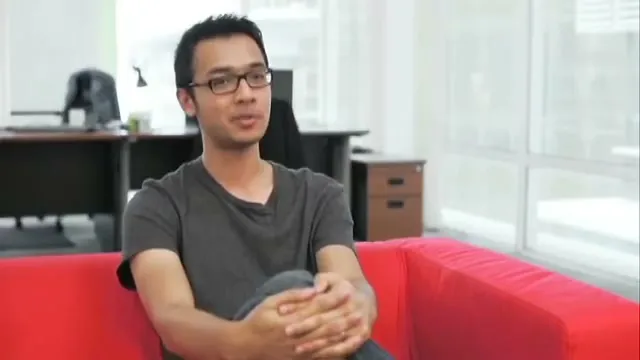
Back in 2013, 8TV filmed Ow and me for an episode of Self Made, where we talked about Nerd Attack, running our own company and how we approached work.
I wrote about the experience at the time. The episode is still on YouTube, and our segment is the first ten minutes.
I watched it again recently, thirteen years later.
I still cringe at some of the things I said. I was pretty confident about how things should work back then, and watching myself talk about running a company now, there are quite a few things I’d answer differently.
So I thought I’d go through some of them.
The maverick
Ow described me as the maverick, the one who goes in guns blazing and asks questions later. He was the opposite, preferring to have his questions answered before doing anything.
The funny thing is, I’ve become more like Ow over the years.
I’ve spent a lot more time coding, and I think that has changed how I approach problems. I find myself thinking things through more carefully, planning ahead and considering what might go wrong before jumping in.
Taking on the CTO role at Intrack changed me too. When you’re responsible for the technical direction of a product and the people building it, you can’t always afford to figure things out as you go.
I’m still flexible, though. I don’t need everything planned perfectly before starting, and sometimes trying something is still the quickest way to find out whether it works.
But I’m definitely not as much of a guns-blazing person as the one sitting on that sofa.
The office without a meeting room
Neither Ow nor I liked meeting rooms, so we decided our office didn’t need one.
We had sofas instead. Meetings, discussions, pretty much everything happened there.
Looking back, that was a bad idea.
There are conversations you shouldn’t have in the open. Sometimes you need to speak privately with someone, have a difficult discussion or correct a member of your team without everyone else listening.
You don’t need a fancy boardroom, but you do need at least one room where people can close the door.
No five-year plan
I said on the show that the mobile industry moved too quickly for us to have a five-year plan.
I still think the industry moves quickly. But using that as a reason not to plan was a mistake.
We didn’t necessarily need a detailed five-year roadmap. We did need some idea of where we wanted Nerd Attack to go.
That became much clearer to me at Intrack. Every year, we’d plan the product roadmap with the marketing team, looking at what they wanted to achieve and what technology needed to deliver. At least everyone had a direction to work towards.
We should have done something similar at Nerd Attack.
We could have looked more seriously at growing our training business, decided whether to develop our own products or worked out what kind of company we wanted to become.
Instead, we were mostly focused on the work in front of us.
By the time we realised we needed more direction, it was too late.
Partners, not staff
This is another one I’d take back.
We said we didn’t hire staff. We brought people in as partners, and if they eventually wanted to leave and pursue something of their own, we’d be happy for them.
The part about supporting people who wanted to pursue their own ambitions, I’d still stand by.
But I was naive about the idea of treating everyone as a partner.
Employees are employees. They’re paid to do a job, and it’s not fair to expect them to carry the same burden as the people who own the business.
At the end of the day, the company is your responsibility. You carry the risks, make the difficult decisions and deal with the consequences when things don’t work out.
I don’t see that the same way I did in 2013.
Work done, not hours
One thing I haven’t changed my mind about is judging people by the work they deliver rather than how many hours they spend sitting at a desk.
I still don’t see much value in measuring someone’s contribution by how long they’re physically in the office.
But I’d add something to that now: effort and improvement.
Sometimes someone doesn’t quite deliver what you expected, but they’ve clearly put in the effort and made progress along the way.
Should that count for something?
I’m still on the fence. Effort alone isn’t enough if the results never improve. But I also don’t think you should ignore someone who’s genuinely learning and getting better just because they haven’t reached the expected standard yet.
It’s something I still think about when managing people.
Comparing ourselves to the world
We also said that we shouldn’t compare ourselves only with other companies in Malaysia. We should look at what’s happening around the world and measure ourselves against that.
I’d still say the same thing today.
Back then, there were only a handful of companies in Malaysia focusing on mobile app development. The industry was young, and there weren’t that many local companies to compare ourselves with.
Today, AI coding agents have lowered the barrier to building software considerably. Things that once required a team of developers can now be attempted by someone working with an AI assistant.
That makes looking beyond our local market even more important.
There’s no reason to limit our standards to what’s happening around us when we’re all working with much of the same technology.
Fear feels different now
On the show, I said that nobody in Malaysia was going to starve just because they quit their job to start a business.
I also talked about the fear of not knowing whether the company would work, or when the next pay cheque would come.
I was newly married then, with no children or other dependants. There was uncertainty, but I had a lot more freedom to take risks.
Now I have two children and ageing parents. The decisions I make don’t affect only me anymore.
Joining FinLit to build MoneyMama brought back some of that same uncertainty. It’s a startup, we’re building something new, and there’s no guarantee things will turn out the way we hope.
But the fear feels different this time.
When you’re younger, you can afford to take certain risks because there’s time to recover. It’s also easier if you have a financial safety net or deep pockets. Without those, even a calculated risk can be difficult.
I still wonder sometimes whether joining FinLit was the right decision.
Things might not go the way I want by the end of the year. Who knows? MoneyMama is still early in its development, and there’s a lot more work ahead.
I don’t think I’d talk about taking risks quite so casually now.
Mobile really did move quickly
At least I was right about one thing. The mobile industry did move fast.
Windows Phone disappeared, and Nerd Attack eventually closed in 2017.
If I could give the man on the sofa one piece of technical advice, it would be to keep working in mobile development, but start paying much more attention to machine learning.
Having a stronger foundation in machine learning would have been useful when LLMs eventually arrived. It’s an area I wish I’d spent more time understanding earlier.
But it’s never too late to learn.
The team
There’s one other thing I noticed while watching the episode, and it wasn’t something either of us said.
It was the people in the background.

Watching that footage again brought back memories of the team we had at Nerd Attack.
From what I can see, every one of them seems to be doing well in their careers now.
I’d like to think Nerd Attack played a small part in getting them started, and that something we did together helped lay a bit of the foundation for where they are today.
I miss that team.